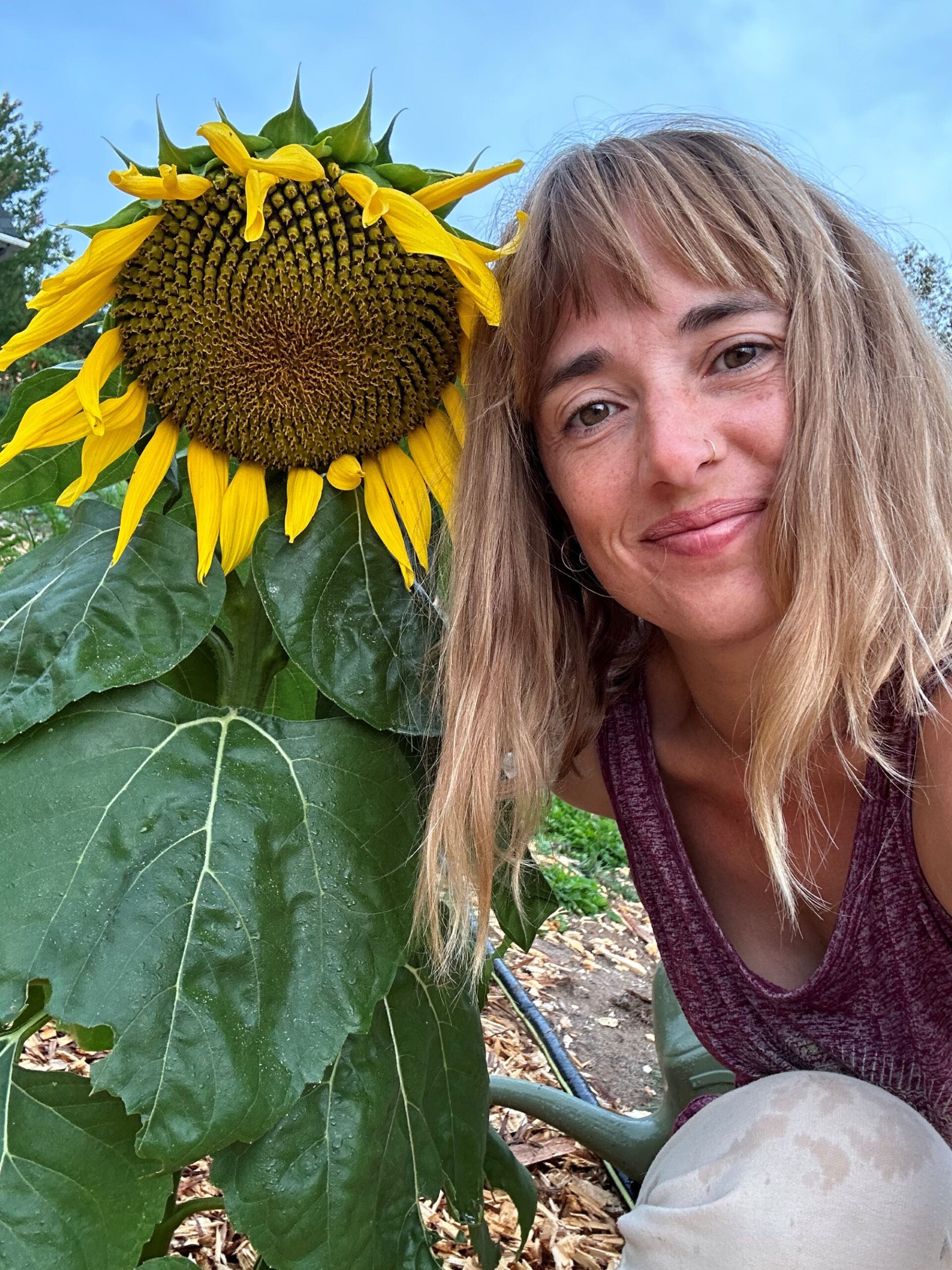
Nature has always felt a little like medicine to me. The environment soothes me, and everything within it captivates my attention through curiosity, fascination and reverence.
Gardening feels especially powerful because you get to participate in the environment and observe it at a more intimate level. For most of my adult life, I dreamed of moving out of the city and finding a home with enough space to create my own garden sanctuary.
Whenever I'm overwhelmed, stuck in my head, or dealing with big emotions, a little time spent pulling weeds, checking on plants, or simply observing the plants and creatures around me, can help me feel more grounded and present.
Recently, I had to choose a topic to research for school, and I decided to investigate whether a single, brief session in the garden actually produces measurable changes in our physiology.
So many things we do to influence our well-being require significant time and repetition before we can tell whether they're helping. I wondered if nature could really provide something more immediate. Could twenty minutes outside, with plants and soil, actually change anything in our physiology?
It turns out there is some fascinating research suggesting that our bodies respond surprisingly quickly to nature.
In one 2024 study, researchers compared people taking a twenty-minute walk along a green woodland path with those walking an urban path. Cortisol (one of the hormones involved in our stress response) decreased in both groups, but the reduction was considerably greater after the nature walk: an average decrease of 53%, compared with 37% on the urban route.
That means the activity itself wasn't the whole story. Where people spent those twenty minutes appeared to matter too.
Another study took this question somewhere I found even more interesting: the soil itself. Participants spent twenty minutes planting seeds, but researchers compared their responses when working with biologically active soil versus sterile soil. Exposure to the living soil was associated with changes in brain activity, mood and over 40 blood-serum metabolites. The researchers observed brain-wave changes consistent with greater relaxation and focus, and reduced tension and stress.
In a 2026 study of horticultural therapy, participants showed significant improvements in mood after each individual gardening session, including reductions in measures of anxiety, depression and overall mood disturbance. Repeated sessions produced additional benefits over time, including improvements in participants' reported sense of meaning in life.
Other studies I reviewed found similar patterns: contact with greener environments was associated with better mood and vigor, while the living-soil experiment showed brain activity shifting away from patterns associated with tension and toward those associated with relaxation.
In other words, we don't necessarily have to garden for weeks before something starts happening. Some of the benefits researchers are measuring appear within a single session.
And then there's the really fascinating part: living soil
Healthy soil is an incredibly complex living ecosystem, and researchers are beginning to investigate how our interaction with that ecosystem may affect our own.
The living-soil study identified changes in 44 blood-serum metabolites after a single, 20-minute gardening session. The researchers investigated the volatile organic compounds (VOCs) produced by microorganisms in the soil and their possible roles in the reduction of stress and inflammation, along with immune regulation and energy metabolism.
There's still a lot to understand here, but I find it remarkable that interacting with nature can produce so many biological changes in such a short amount of time.
One of the encouraging things about this research is that the studies involved things as ordinary as walking through a green space and planting seeds for twenty minutes. When I lived in the city, I would take a blanket, drink, my dog, and a journal or book, and find a nice spot in public greenspace fairly regularly. I also enjoyed strolling through greenspaces or neighborhood landscapes with my dog.
There are many ways to access nature. Maybe that's pulling a few weeds, repotting a houseplant, sowing some herbs on a balcony, or joining a community garden. Maybe you go for a walk somewhere green, put your hands in the soil, or sit outside and pay attention to what is growing around you. There is always something happening. Spending time in the garden pulls me out of the abstract world in my head and into something immediate. Is that tomato finally turning red? Who ate this leaf? What is that tiny insect? Where did that plant come from? Is that a monarch chrysalis?
What I love about this research is that it shows you don't need to commit to a new lifestyle or wait six weeks to find out whether it makes any difference. If you're overwhelmed, restless, low, or simply spending too much time inside your own thoughts, you can go interact with something green for a little while and notice what happens.
And on a difficult day, twenty minutes in the garden can feel like a very accessible place to begin.